How to Increase Your Credit Card Limit (and When You Should)
Your credit limit is the maximum amount you can spend on your credit card. When you first get a card, the bank sets this limit based on your income and credit history. Over time, you may feel the limit is too small. The good news is that it can usually be increased. But a higher limit is useful only if you use it wisely.
Why a higher limit can help
A bigger limit is not just about spending more. Used well, it can actually help your finances:
- Lower credit utilisation: Utilisation is the share of your limit that you use. If you spend the same amount on a bigger limit, your utilisation goes down, and this can support a better credit score.
- Room for emergencies: A medical bill or urgent travel will not push you to the edge of your limit.
- Fewer declined payments: Large bookings, like flights or hotel stays, go through more smoothly.
- Space for big planned purchases: You can buy a laptop or appliance on the card and still keep a buffer.
For illustration: if you spend 30,000 a month on a card with a 50,000 limit, you use 60% of it. On a 1,00,000 limit, the same spending is only 30%.
Two ways your limit goes up
1. The bank offers it
Many banks review your account from time to time. If you pay on time and use your card regularly, the bank may send you an offer for a higher limit by SMS, email or in the app. Usually you just need to accept it. Some banks increase the limit only after you say yes, so read the message carefully.
2. You ask for it
You can also request an increase yourself. Most banks let you do this through:
- the bank's mobile app or net banking (look for "credit limit" or "limit enhancement")
- the customer care helpline
- a branch visit, if your bank offers that
The bank may ask for your latest salary slips, bank statements or Income Tax Return to confirm your income.
What banks look at
Each bank has its own rules, but these points matter almost everywhere:
- Payment history: Paying your bill in full and on time, every month, is the strongest signal.
- Card age: Banks usually like to see at least several months of use before they raise a limit.
- Income: A salary hike or new job is a good reason to ask. Share updated income proof.
- Credit score: A healthy score shows you handle credit well.
- Existing loans and EMIs: If a large part of your income already goes to EMIs, the bank may say no.
Tips to improve your chances
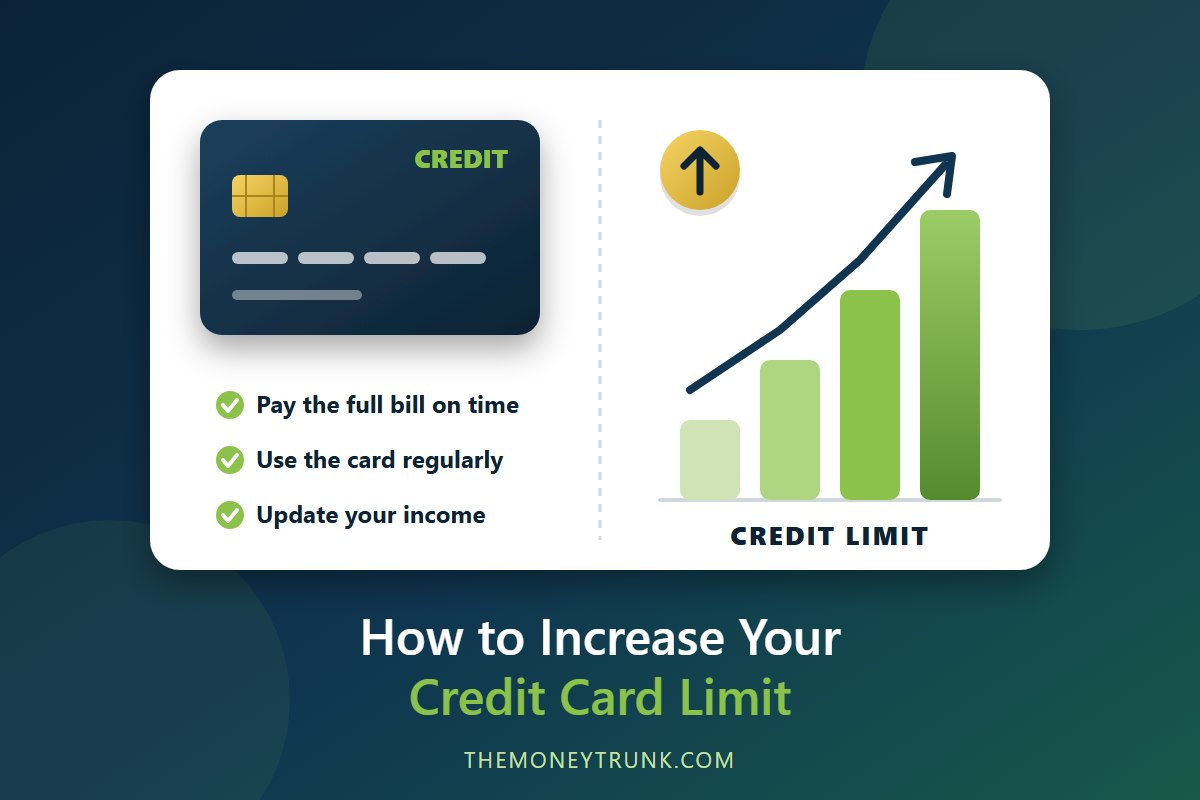
- Pay the full bill, not just the minimum amount due.
- Use the card regularly for normal expenses, then pay it off.
- Update your income with the bank after a salary increase.
- Avoid applying for many cards or loans at the same time.
- Check your credit report and fix any mistakes before you ask.
Does asking hurt your credit score?
It depends on the bank. A pre-approved offer from your bank usually does not involve a fresh hard enquiry. If you request an increase yourself, some banks may check your credit report, which can cause a small, short-term dip. Ask the bank how it handles this before you apply.
When you should NOT increase your limit
A higher limit is not right for everyone. Think twice if:
- you often carry a balance and pay interest every month
- you tend to overspend when more money is available
- you are already struggling with EMIs or other dues
In these cases, a bigger limit can lead to bigger debt. It is better to first clear your dues and build a habit of paying in full.
If your request is declined
Do not worry. Ask the bank why, if possible. Then work on the reason: pay on time for a few more months, reduce your outstanding balance, or wait for a salary update. You can try again later. Avoid applying again and again in a short time.
Find the right card for you
If your current card does not suit your needs, use Find My Card on TheMoneyTrunk to see cards that match your income and spending, or check your Free Credit Score before you apply.
Note: Credit limits, eligibility and the review process are decided by each bank as per its current terms and can change. This article is for general information only.





 Home
 Search
 Cards
 Loan
 Insurance
 Blogs
 Support